12 min read
Recovery of organic waste: compost, biogas and open dumping
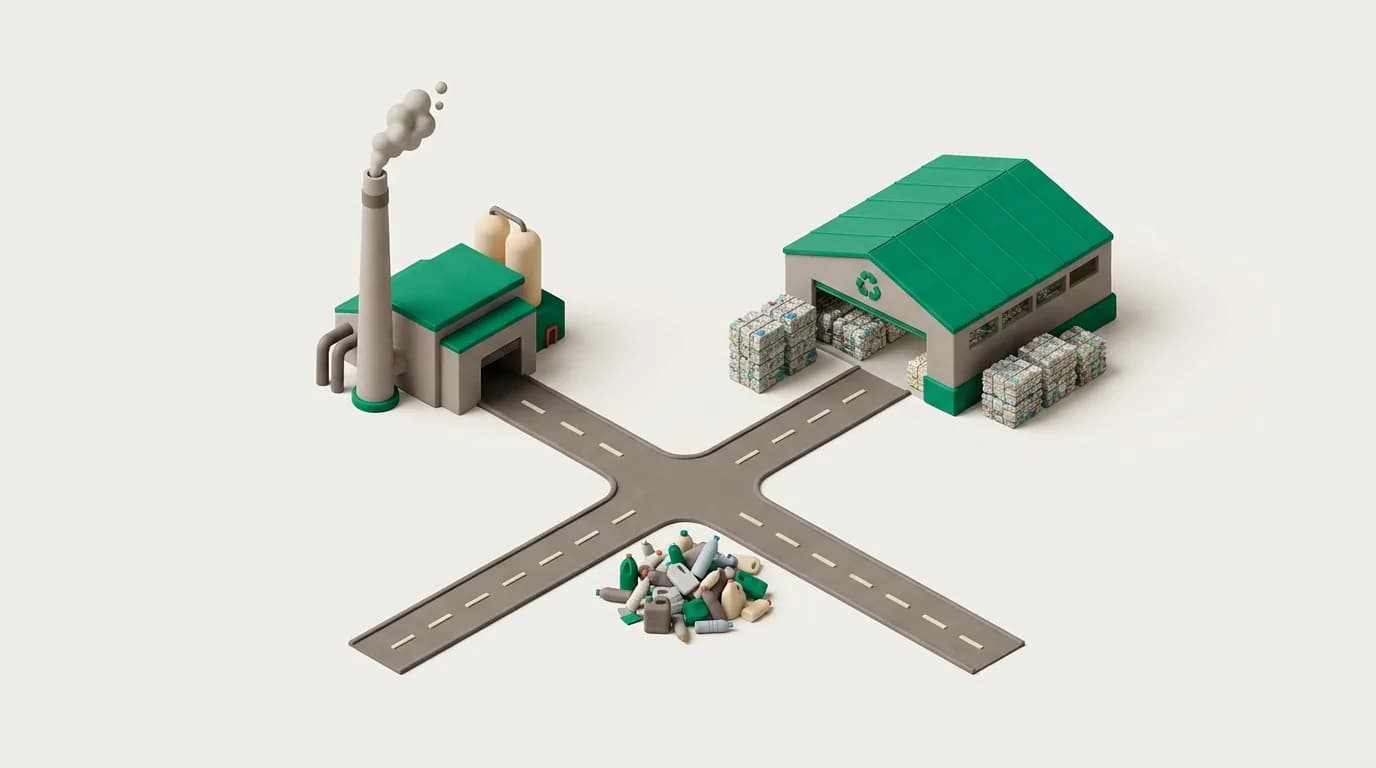
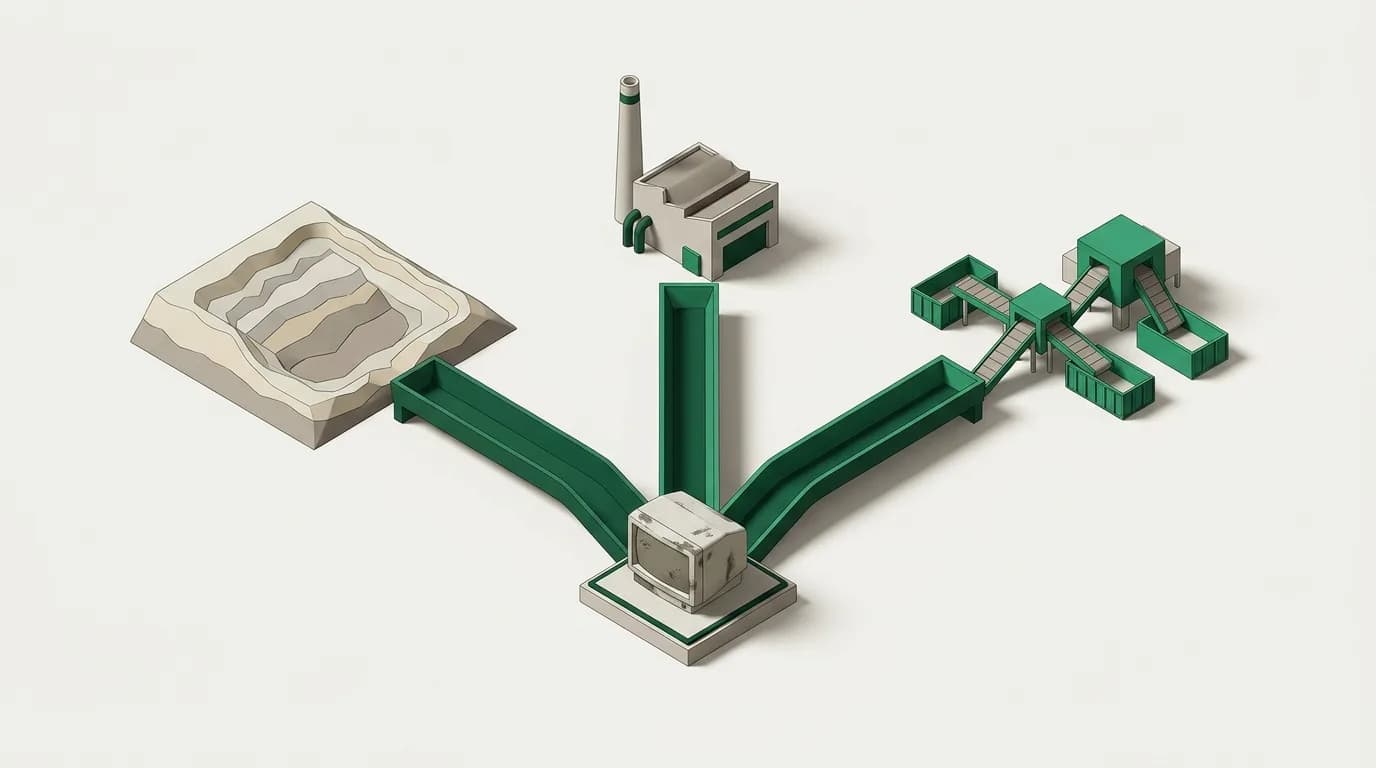
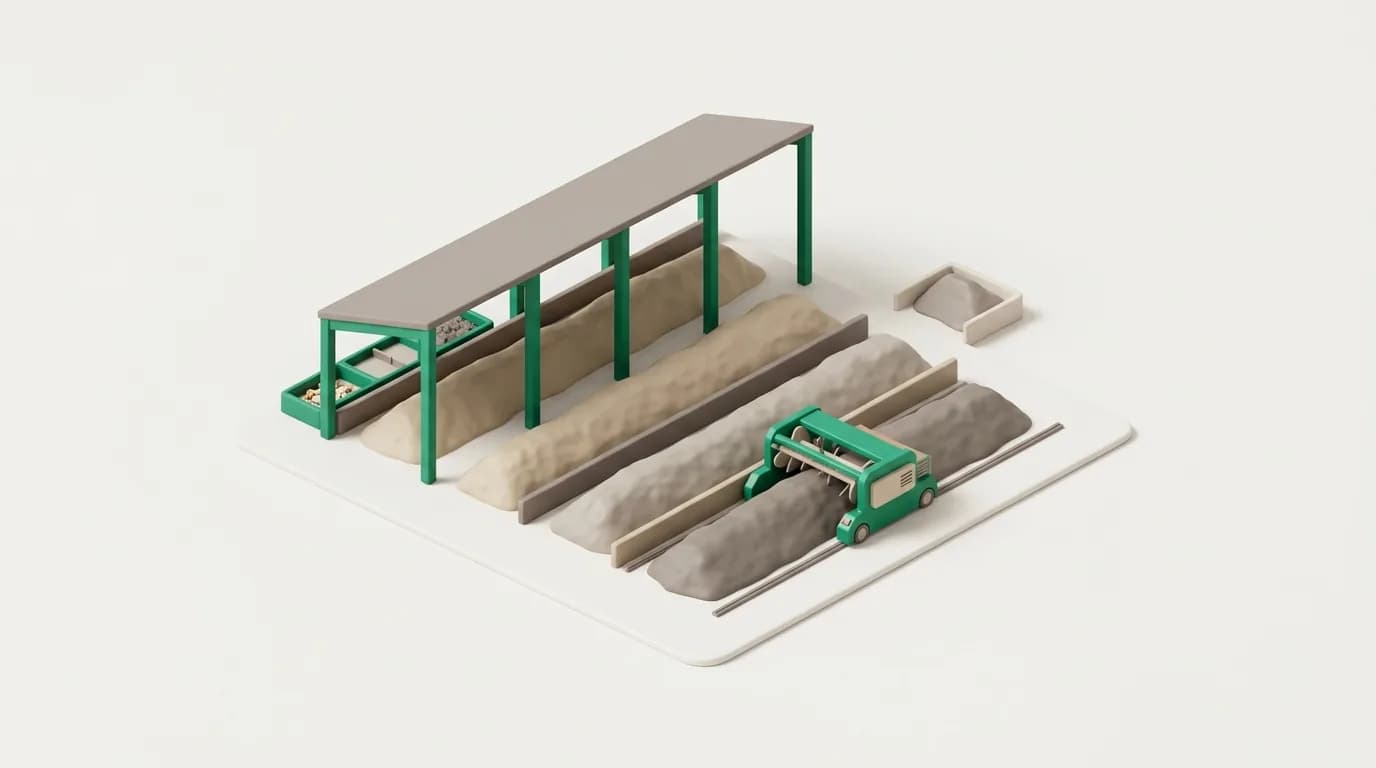
Organic waste substitutes no product; the credit comes entirely from avoided methane. Open dumping, landfill, composting and biogas compared on ecoinvent 3.12 data.
Read moreecoinvent v3.12 background data, CML/ReCiPe/EF v3.1 method selection, data quality (DQR, pedigree matrix) and uncertainty analysis — the layer that decides where your numbers come from and how much they can be trusted.
27 articles
Organic waste substitutes no product; the credit comes entirely from avoided methane. Open dumping, landfill, composting and biogas compared on ecoinvent 3.12 data.
Read moreThe same tonne of plastic displaces electricity if burned and granulate if recycled — but the two credits are not the same size and cannot both be granted to one stream. The waste hierarchy, EN 15804 Table 13 and the formulae.
Read moreHotspot analysis shows which process, flow or module the total environmental impact comes from. The three axes of contribution analysis, the Pareto logic, hotspots that shift by impact category, and the move to a reduction scenario.
Read moreService life is the parameter that moves an LCC result most after the discount rate. Where RSL comes from, the replacement formula N = ceil(T/SL) − 1, residual value, the B2/B3/B4 distinction and how long-lived products get unfairly penalised.
Read moreA4 is the transport of the product from factory gate to site, calculated as mass × distance × a per-tkm factor. Vehicle class, utilisation, empty return and the trap of volume-limited products; the EN 15804 scenario table and a worked example.
Read moreA tonne of recovered aluminium and a tonne of paper do not earn the same credit. The primary and secondary route, the order of magnitude of the credit and the specific trap for each of six materials.
Read moreThe discount rate is the single assumption that moves an LCC result most. The real-versus-nominal distinction, the Fisher relation, typical ranges for public and private projects, the advantage of real terms under high inflation and a sensitivity example.
Read moreA product's embodied carbon is the sum of its A1–A3 emissions per declared unit. The formula, the A1/A2/A3 split, pulling values from EPDs, the biogenic carbon distinction and a worked example for 1 m² of wall.
Read moreThe two quiet multipliers of a recovery credit: yield, which describes process loss, and the substitution ratio, which describes quality. Catalogue yields by material, the moisture correction and downcycling.
Read moreA recovery calculation measures how much greenhouse gas and primary energy is avoided compared with the scenario in which a waste stream is not recovered. The formula, the four inputs and a worked 100-tonne PET example.
Read moreLife cycle costing (LCC) in seven steps: analysis period and functional unit, assigning items to EN 15804 modules, the real-versus-nominal decision, discounting and NPC, EAC, a worked example and sensitivity.
Read moreFocusing on carbon can reverse some decisions. The real role of acidification, eutrophication, ozone, toxicity and resource depletion.
Read moreEPDs are no longer read but processed. The ILCD+EPD data format, the digital product passport and direct import into building LCA tools.
Read moreChoosing a background database is not a technical detail but a methodological decision that changes the result. Coverage, system models and why you must not mix.
Read moreModelling everything with primary data is neither possible nor necessary. The foreground-background split and allocating a data collection budget well.
Read moreCounting litres is not a water footprint. Scarcity weighting, the consumption-versus-degradation split, and regional sensitivity.
Read moreNobody knows what recycling infrastructure will look like in fifty years. How to work with that uncertainty and report scenarios honestly.
Read moreAn LCA result is only as solid as its weakest assumption. One-at-a-time scans, hotspot analysis and how this differs from uncertainty.
Read moreThe split between foreground (manufacturer-specific) and background (generic) data is the foundation of an LCA's scientific credibility. Practical rules and edge cases.
Read moreHow does EN 15804+A2's mandatory DQR system work? The 1-5 scale on each of five dimensions, the aggregate score, and triggering sensitivity scenarios.
Read morePicking the right activity from ecoinvent's 21,000+ entries is a methodological decision. Geographic, technological and temporal representativeness.
Read moreMidpoint analysis offers 18+ categories; endpoint collapses to 3 main areas. The practical impact of characterisation, normalisation and weighting steps.
Read moreDifferences between the three leading LCIA methods: midpoint vs endpoint, geographic resolution, EN 15804 and PEFCR alignment, academic use.
Read moreThe EU Commission's EF method is mandatory under PEFCR. 16 categories, the normalisation and weighting reference set, and overlap with EN 15804.
Read moreIPCC's 100-year and 20-year global warming potential factors yield different results. Methane can shift by 4×. Why and when does that matter?
Read moreThesis structure for MSc students: goal-scope, inventory, impact assessment, interpretation. clca academic license at 50% off with real-time supervisor feedback.
Read moreecoinvent v3.12 was released in September 2025. New datasets, updated Turkish grid mix, the three system-model variants and automatic electricity calculation in clca.
Read moreLast updated