12 min read
Recovery of organic waste: compost, biogas and open dumping
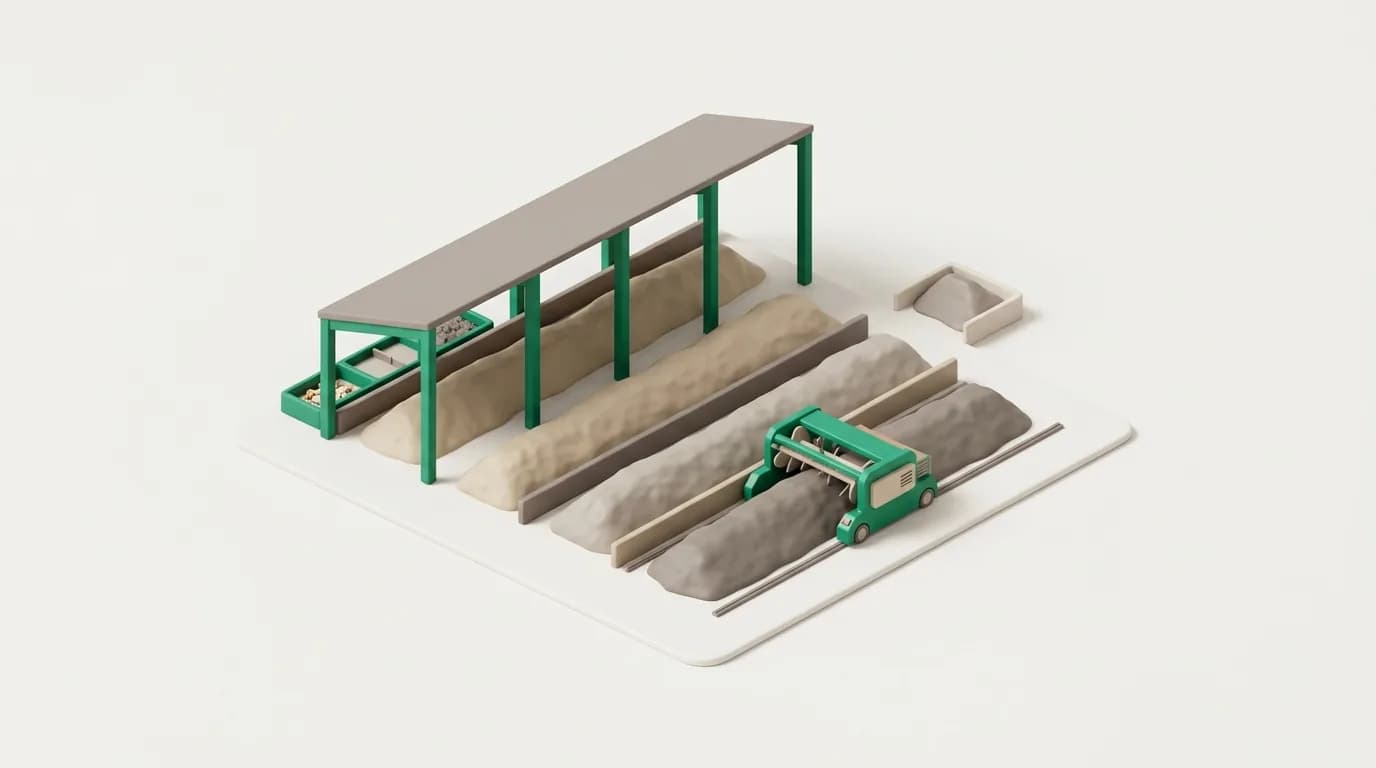
Organic waste substitutes no product; the credit comes entirely from avoided methane. Open dumping, landfill, composting and biogas compared on ecoinvent 3.12 data.
Read moreEvery clca article tagged “recycling credit” — 7 technical pieces covering the topic from methodology, standards interpretation and practical application angles.
7 articles
Organic waste substitutes no product; the credit comes entirely from avoided methane. Open dumping, landfill, composting and biogas compared on ecoinvent 3.12 data.
Read moreThe same tonne of plastic displaces electricity if burned and granulate if recycled — but the two credits are not the same size and cannot both be granted to one stream. The waste hierarchy, EN 15804 Table 13 and the formulae.
Read moreThe climate benefit of the waste a site sends to recycling does not enter the Scope 3 inventory, but it can be reported as a separate balance. Data collection, matching, double-counting rules and claim wording that complies with ISO 14021.
Read moreA tonne of recovered aluminium and a tonne of paper do not earn the same credit. The primary and secondary route, the order of magnitude of the credit and the specific trap for each of six materials.
Read moreThe two quiet multipliers of a recovery credit: yield, which describes process loss, and the substitution ratio, which describes quality. Catalogue yields by material, the moisture correction and downcycling.
Read moreA recovery calculation measures how much greenhouse gas and primary energy is avoided compared with the scenario in which a waste stream is not recovered. The formula, the four inputs and a worked 100-tonne PET example.
Read moreLEED's materials credits tie points directly to product EPDs. The different weight of product-specific and industry-average EPDs, and embodied carbon reduction.
Read moreLast updated