Industry-average EPD or product-specific EPD?
There are three EPD types: product-specific, manufacturer average and industry average. Representativeness, the credit difference in green building schemes, tender expectations, cost and the strategy for moving from an average to a product-specific declaration.
By clca Editorial TeamLast updated
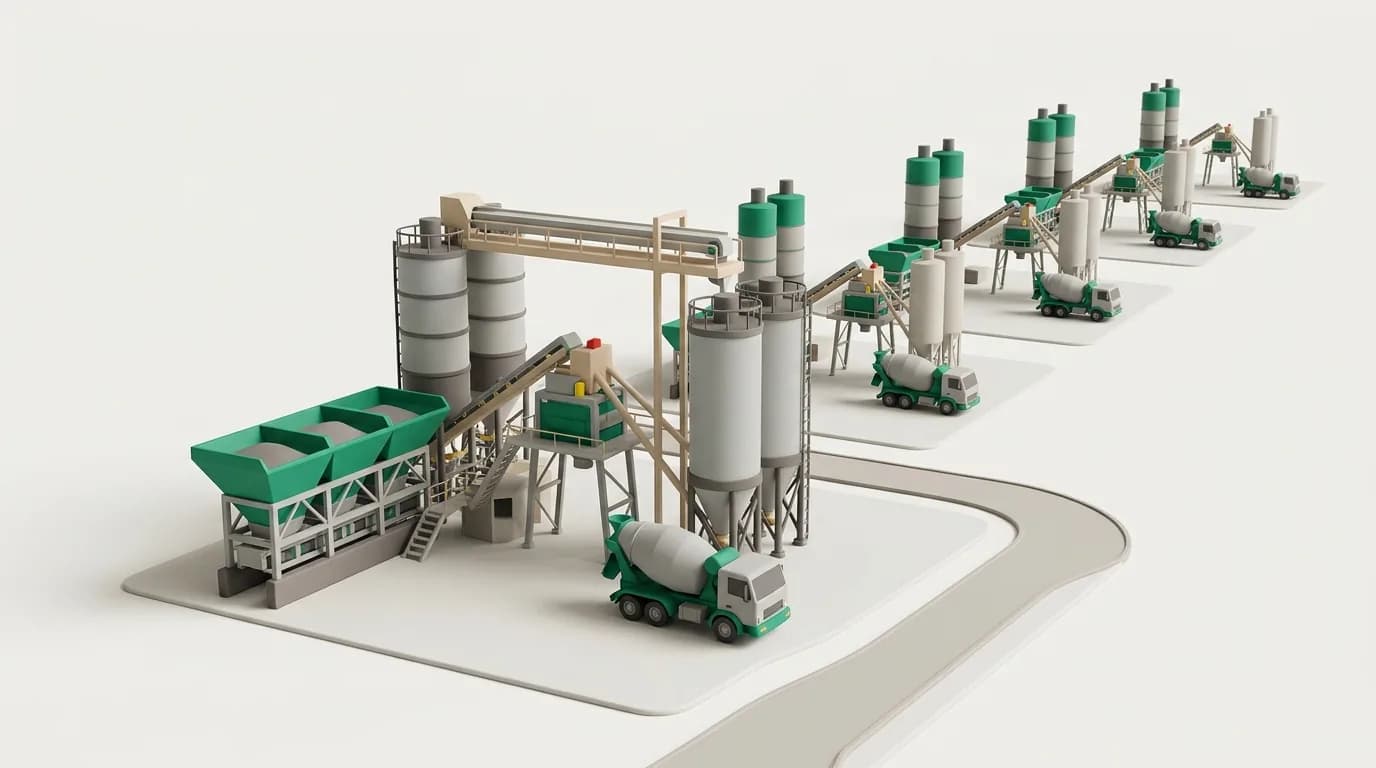
A product-specific EPD is a declaration prepared for one manufacturer's defined product using that manufacturer's own plant data; an industry-average EPD is a joint declaration prepared by an association or consortium, weighting the data of many manufacturers by production volume. Both are calculated under EN 15804+A2, both pass independent verification and both are published with the same programme operators; the difference is whom the number represents. That difference is worth money in three places: the credit obtained in green building certification, acceptance or rejection under tender specifications, and whether a product that is better than the average gets to show it. The third type in between — the manufacturer average — covers several plants or variants of one manufacturer and is treated as product-specific in practice.
The three EPD types
A product-specific EPD represents the production of a specific product at a specific plant — or at plants listed by name; the inventory is that plant's measured energy, raw material and waste data. A manufacturer-average EPD takes a weighted average across several plants of the same manufacturer or across closely related product variants; programme operators require this to be stated explicitly in the document and usually ask that the difference in results between variants stays below a threshold — around 10% with most operators. An industry-average (or industry-wide) EPD is prepared with data collected by a sector association from its members; the document belongs to the association and members refer to it as 'participants'. The EPDs of national ready-mix concrete, cement or steel associations are of this type. There is a fourth thing, but it is not an EPD: generic database values (such as an ecoinvent activity) do not count as verified declarations and do not replace an EPD in certification.
Representativeness and variance: what does the average hide?
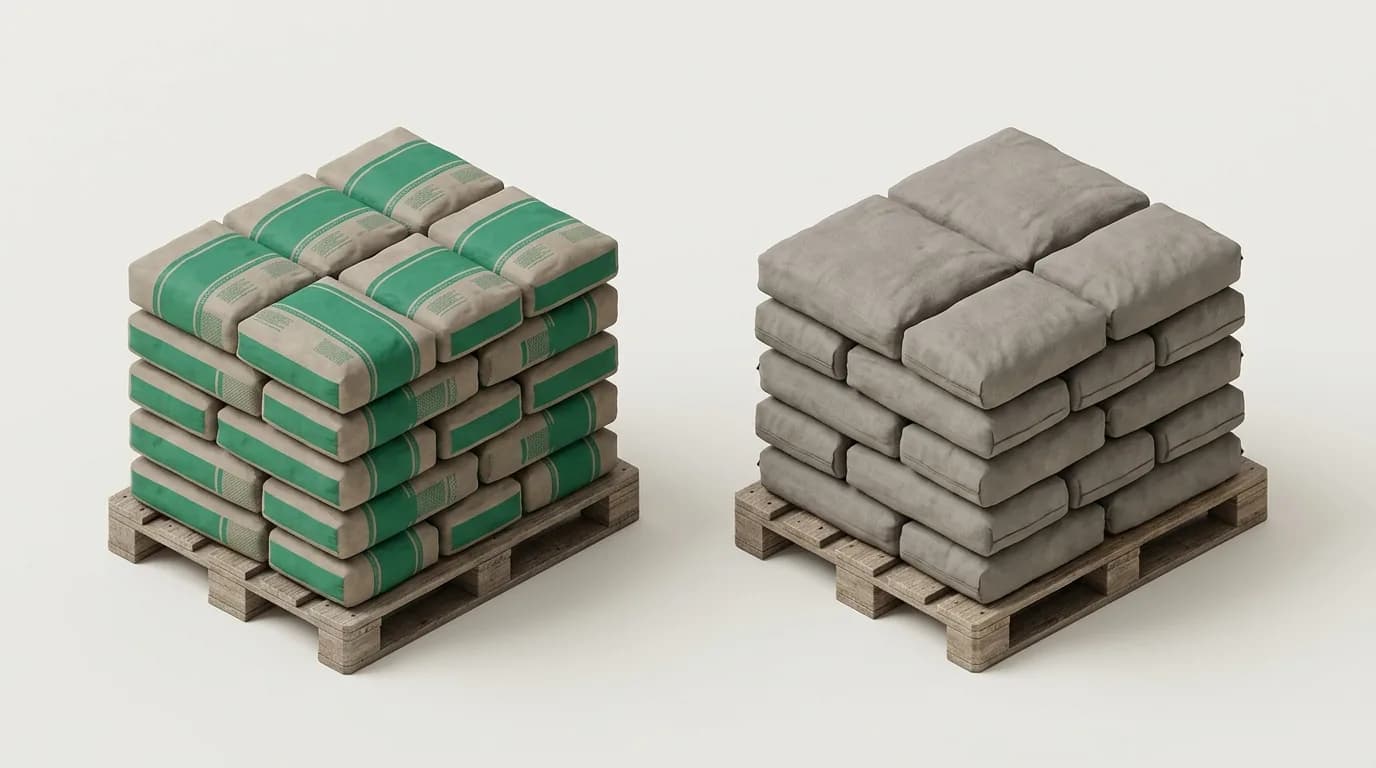
An industry average collapses the technological spread of a sector into one number. In cement the A1–A3 GWP difference between CEM I and high-slag CEM III reaches 30–50%; in steel there is close to a threefold difference between the scrap-based EAF route and the BF-BOF route; in ready-mix concrete a 20–40% range is seen within one strength class depending on cement type. The average falls in the middle of these ranges. For a plant better than average, using the sector EPD means erasing its own advantage in the market; for a plant worse than average, the average means looking better than it is — which surfaces at the next audit or when a product-specific request arrives. EN 15804 defines the averaging rules (weighting by production volume, declaring the plants and time period covered) and requires the share represented to be stated; the reader should be able to see from the document what percentage of the sector it stands for.
The credit difference in green building schemes
Certification schemes do not value the two types equally. In the materials credit of LEED v4 and v4.1 an industry-wide EPD counts as half a product and a product-specific Type III EPD as a full product; a project needs twice as many products with sector EPDs to reach the required count. LEED v5 keeps the same logic and continues to reward product-specific data. BREEAM Mat 01 and DGNB prefer product-specific EPD data over generic data in the building LCA; in DGNB and the German market product-specific data is effectively expected via ÖKOBAUDAT. The result: when a design team chooses between two equivalent products, the one with a product-specific EPD is preferred because it earns credit. For the manufacturer this means the EPD type is a sales tool, not a compliance document.
Tenders and customer demand
In public and corporate tenders the EPD requirement comes in two forms: 'a valid EPD must be submitted' and 'a product-specific EPD must be submitted and its GWP must be below this threshold'. The second form is spreading fast in Europe — the Dutch MPG calculation, the French RE2020 and the Nordic embodied carbon limits effectively make product-specific data mandatory, because a threshold comparison cannot be done with an average document. In Turkey, green building projects and manufacturers exporting to the EU receive the same demand from customers: the architecture practice wants product-specific data for its building LCA, the importer wants it for its own certification file. A sector EPD satisfies the first of these demands and not the second; being a 'participant' is not the same as owning the document, and some specifications draw that line explicitly.
Cost and time
The appeal of the sector EPD is cost: the LCA study, verification and operator fees are shared among members, and the association runs a survey instead of collecting data from each plant. A product-specific EPD requires a year of the plant's energy, raw material, transport and waste data, an LCA model is built, and the independent verification and operator registration are product-specific. The time difference comes from data preparation; for a plant with orderly data a product-specific EPD is typically completed within a few months. The cost balance shifts with three factors: the number of products (for manufacturers with many variants, a product-group EPD and a copied model cut the cost per variant), how far the software automates data collection and table generation, and how many tenders the EPD will serve over its five-year life. A product-specific requirement in a single large project more than pays for the document.
Transition strategy: from average to product-specific
The two types are not mutually exclusive; many manufacturers use them in sequence. On market entry, joining the association EPD is fast and cheap and closes the 'is there an EPD' question. In the same period plant data collection begins: metered energy, production volume, raw material invoices, waste records. Once a year of data has accumulated, a product-specific EPD is prepared for the best-selling product or the one most often demanded in tenders; the verified model is copied for variants and other plants and extended into product-group EPDs. The sector EPD remains for low-volume products. Timing is the critical point: if the validity period of the sector EPD and the publication date of the product-specific EPD are aligned, two different numbers for the same product do not circulate at the same time.
Which one in which situation?
- Comparison between material classes in early design: the industry average suffices, because differences between classes exceed differences between plants
- Choosing between two suppliers or a tender with a GWP threshold: product-specific is required, an average cannot enter a threshold comparison
- A project targeting LEED/BREEAM/DGNB credit: product-specific, because a sector EPD counts as half a product or is treated as generic data
- A plant clearly better than average (EAF steel, low-clinker cement, high scrap content): product-specific, otherwise the advantage stays invisible
- Many low-volume variants: a product-group EPD or the association EPD, with resources reserved for the main products
- Export to the EU market: the buyer's certification file will ask for product-specific data, so it is prepared before export
Frequently asked questions
- What is an industry-average EPD?
- An EN 15804 EPD prepared and published in its own name by a sector association or consortium, weighting the plant data of many manufacturers by production volume. Member manufacturers refer to the document as participants; it represents a declared share of the sector rather than any single plant.
- When does a product-specific EPD become mandatory?
- When the specification says 'product-specific', sets a GWP threshold, or the building LCA is calculated against a national limit (Dutch MPG, French RE2020, Nordic embodied carbon limits). It is not mandatory in LEED but is needed for full credit. It is also effectively mandatory in a supplier comparison, because an average does not show differences between plants.
- What is the difference between a sector EPD and a product-specific EPD in LEED?
- In the materials credit of LEED v4 and v4.1 an industry-wide EPD counts as half a product and a product-specific Type III EPD as a full product; reaching the product count required for the credit is twice as hard with sector-EPD products. LEED v5 continues to reward product-specific data.
- Can several products be declared in one EPD?
- Yes; programme operators allow product-group EPDs, usually on condition that the difference in results between variants stays below a threshold (around 10% with most operators) or that the worst case is declared. The document states explicitly which variants it covers and the representative product; unlike an industry average, it still counts as product-specific.
- How long does the move from a sector EPD to a product-specific EPD take?
- Data preparation is the deciding factor: a year of plant data (energy, raw materials, transport, waste) is needed. With the data ready, modelling, independent verification and operator publication typically take a few months. Best practice is to start collecting data while joining the sector EPD and to align the validity dates of the two documents.
Tags
- EPD
- industry-average EPD
- product-specific EPD
- construction product EPD
- EPD verifier
- green building certification
- EN 15804
Related reading
All articles in Verification- Verification
How to read an EPD: a guide for procurement and design teams
An EPD is read in five steps: the cover data, the declared unit, the module scope, the GWP rows and the comparability conditions. Red flags, and moving EPD data into a building LCA.
10 min read - Verification
EPD validity: the five-year rule and what triggers an update
An EPD is valid for five years from its issue date; it is updated earlier if product, process or energy source changes the results significantly. What happens when an EPD expires, which changes call for re-verification and how to plan the five-year maintenance cycle.
10 min read - Verification
How to obtain an EPD: process, timeline and cost items
An EPD is obtained in six steps: PCR selection, data collection, LCA model, EPD document, independent verification and publication by a programme operator. Typically 6–14 weeks; the cost has four components.
10 min read - Green Building
EPD credits in LEED: which document earns which points
LEED's materials credits tie points directly to product EPDs. The different weight of product-specific and industry-average EPDs, and embodied carbon reduction.
10 min read