EPD validity: the five-year rule and what triggers an update
An EPD is valid for five years from its issue date; it is updated earlier if product, process or energy source changes the results significantly. What happens when an EPD expires, which changes call for re-verification and how to plan the five-year maintenance cycle.
By clca Editorial TeamLast updated
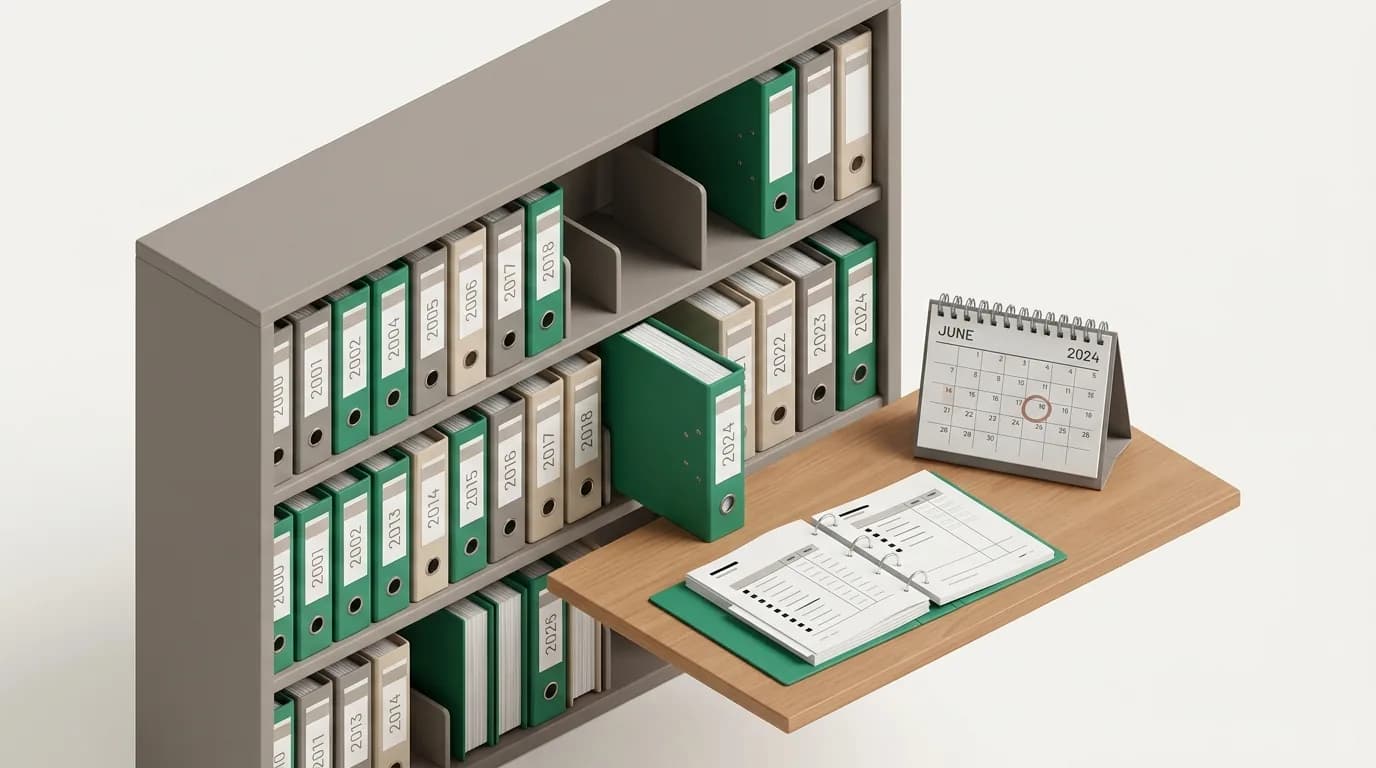
An EPD is valid for five years from its issue date under EN 15804+A2; within that period, if the product's composition, production process or energy source changes the declared results significantly, the document must be updated earlier. The five-year rule is the provision that fixes, for European construction products, the validity period that ISO 14025 leaves to the programme operator, and every ECO Platform member operator applies it. The rule looks simple but raises three practical questions: what is the status of an expired EPD, which change counts as 'significant', and what separates a full renewal from a minor revision. This article sets out the rules an EPD owner needs in order to keep the document valid and correct for five years, and the data refresh plan to build for it.
Where does the five-year rule come from?
The source of the validity period has three layers. ISO 14025 requires Type III environmental declarations to carry a validity period but leaves the length to the programme operator's general programme instructions. EN 15804+A2 sets that period for construction products at no more than five years from the issue date, with the proviso 'as long as there is no significant change in the data affecting the declaration'. Programme operators (EPD International, IBU, ITB, ECOnsult and others) apply the same five years in their own instructions; some tie the start of validity to the verification date, others to the publication date, and that distinction is written explicitly on the document's cover as 'issue date' and 'valid until'. The reason for five years is data ageing: background databases, grid electricity factors and production technology change too much in five years for the declaration to remain representative; the period is therefore not a formality but a condition of comparability.
What happens when an EPD expires?
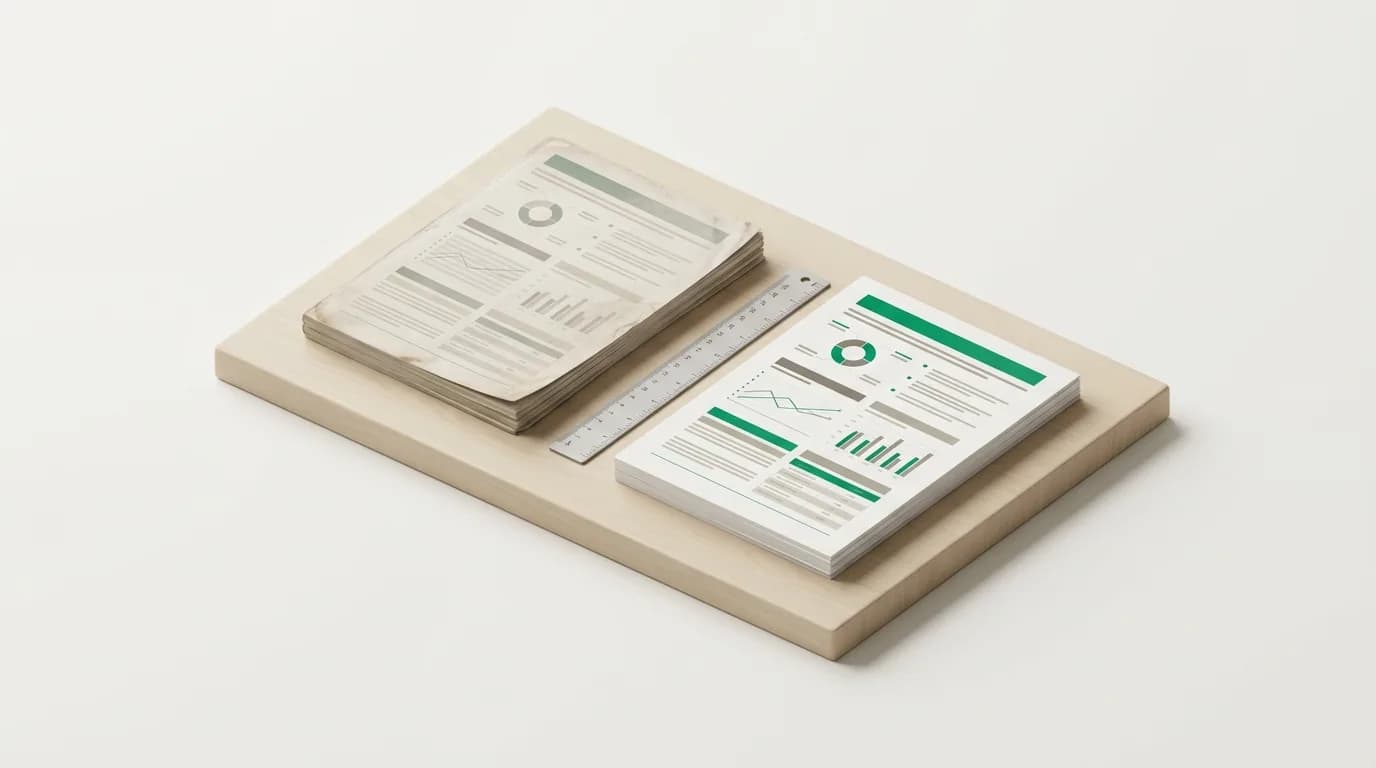
From the valid-until date, the EPD is marked 'expired' in the programme operator's registry and most operators move the document to an archive; the link keeps working, but the document is no longer a valid declaration. The consequences are felt in three places. Green building certification schemes (LEED, BREEAM, DGNB) accept only valid EPDs in the materials credits; an expired EPD drops out of the credit during project documentation. In public and private tender specifications the wording 'valid, third-party verified EPD' is standard; the risk of falling off the supplier list comes from there. Digital EPD platforms and the databases of building LCA software (including national databases such as ÖKOBAUDAT) remove expired records from display or flag them with a warning; the designer cannot pull the product into the model. Those three effects require renewal to start at least three months before expiry, because verification and publication take 2–8 weeks and a gap period is lost market.
Update triggers
The changes that make an update mandatory before the five years are up are defined with a similar list in the operators' instructions; the shared threshold is typically a change of around ten per cent in any declared indicator, though the exact threshold and which indicators count vary by operator.
- Product composition: a change in formulation, raw material supplier or recycled content share
- Production process: a new line, furnace or drying technology; relocation of production to another plant
- Energy source: a switch from fossil to renewable or the reverse; a change of electricity supply contract
- Standard and PCR revision: a new revision as with the move from EN 15804+A1 to +A2, renewal of the PCR or its expiry
- Background data: when the database version an operator mandates changes (for example an ecoinvent update), some operators require recalculation
- Product scope: a new product variant added to the EPD or a changed definition of the product family
- Error correction: a calculation or declaration error discovered in the published document
Renewal or revision?
Operators distinguish two procedures, and they call for different depths of verification. A revision is a correction made within the validity period that does not change the LCA results, or changes them below the threshold: product name, contact details, additional technical information, minor data corrections. A revision is usually published as a new version under the same EPD number, the validity date does not change and the verifier approves only the changed section. A renewal is the full update made at the end of validity or on a triggering change: a new 12-month data period, current background database, the applicable PCR and standard revision, full verification and a new five-year validity. On renewal the EPD number is kept or reissued depending on the operator; the old version goes to the archive. The practical difference shows in cost and time: a revision means days and a small verification fee, a renewal weeks and a full verification fee. To see which side of the threshold a change falls on, its effect is first calculated in the model; the operator is approached with that calculation.
When the standard revision changes: the A1-to-A2 example
A change of standard revision is the one trigger that can effectively shorten the five-year rule, and the move from EN 15804+A1 to +A2 is its nearest example. A2 widened the indicator set (splitting GWP into fossil, biogenic and land use components, adding new resource use indicators), tied the characterisation method to EF 3.x and made the C and D modules mandatory to declare. ECO Platform and its member operators set a transition date; after that date new and renewed EPDs were accepted only under A2, while EPDs published under A1 remained valid until their own expiry. The result was that an A1 document became 'valid but not comparable': in a building LCA, A1 and A2 EPDs cannot be placed in the same table. This example requires the EPD owner to watch the standard and PCR calendar: the PCR's own expiry may come before the EPD's, and renewal must then be done under the new PCR.
The five-year maintenance cycle: annual data refresh
The cheapest way to keep an EPD correct for five years is to set up renewal not as a one-off project but as an annual inventory refresh. Each year the same 12-month data set (raw materials, energy, water, waste, production volume) is re-entered into the model and the result compared with the previous year; if the deviation is below the threshold it is noted, if above, the revision or renewal decision is taken that year. This routine delivers three things: triggering changes are noticed in the year they happen rather than five years later; when renewal time comes, data collection is almost skipped and the process reduces to verification and publication; and the same data set is ready for the corporate carbon inventory (customers asking for Scope 3 category 1 data). Version management is part of the cycle too: each published EPD version is stored together with a frozen copy of the LCA model behind it; when the verifier asks five years later 'what was this value in the previous version', the answer comes from the records. Because digital EPD formats (such as ILCD+EPD) carry version and validity fields in machine-readable form, an updated document is re-exported rather than uploaded to platforms by hand.
Frequently asked questions
- How many years is an EPD valid?
- No more than five years from the issue date under EN 15804+A2. ISO 14025 leaves the period to the programme operator; every ECO Platform member operator applies five years. The start of validity is the verification or publication date depending on the operator, and it is printed on the document's cover.
- Can an expired EPD still be used?
- Not as a valid declaration. It is marked 'expired' in the operator's registry; it is not accepted in LEED, BREEAM and DGNB materials credits, does not meet the 'valid EPD' requirement in tender specifications, and is removed from digital databases or flagged with a warning.
- Which change requires an EPD to be updated early?
- Product composition, production process, energy source, standard or PCR revision, product scope and error corrections. The shared threshold is typically a change of around ten per cent in a declared indicator; the exact threshold varies by operator. The effect is calculated in the model first, and the operator is approached with that calculation.
- What is the difference between EPD renewal and revision?
- A revision is a correction that does not change the results or changes them below the threshold; it is published as a new version under the same number and the validity date does not change. A renewal is the full update with a new data period, current database and applicable PCR; it receives full verification and a new five-year validity.
- When should EPD renewal start?
- At least three months before expiry, because verification and publication take 2–8 weeks and a gap period means lost market in certification and tenders. A manufacturer that refreshes its inventory annually almost skips the data collection step at renewal.
Tags
- EPD validity
- EPD
- EN 15804
- PCR
- EPD update
- verification
- digital EPD
- EPD verifier
Related reading
All articles in Verification- Verification
How to read an EPD: a guide for procurement and design teams
An EPD is read in five steps: the cover data, the declared unit, the module scope, the GWP rows and the comparability conditions. Red flags, and moving EPD data into a building LCA.
10 min read - Verification
Industry-average EPD or product-specific EPD?
There are three EPD types: product-specific, manufacturer average and industry average. Representativeness, the credit difference in green building schemes, tender expectations, cost and the strategy for moving from an average to a product-specific declaration.
10 min read - Verification
How is an Environmental Product Declaration (EPD) calculated?
The calculation behind an EPD is an LCA, but not a free one: the PCR dictates what you calculate and how. The flow from rule set to result table.
12 min read - Verification
How to obtain an EPD: process, timeline and cost items
An EPD is obtained in six steps: PCR selection, data collection, LCA model, EPD document, independent verification and publication by a programme operator. Typically 6–14 weeks; the cost has four components.
10 min read