Midpoint vs endpoint LCIA: which level for which decision?
Midpoint analysis offers 18+ categories; endpoint collapses to 3 main areas. The practical impact of characterisation, normalisation and weighting steps.
By clca Editorial TeamLast updated
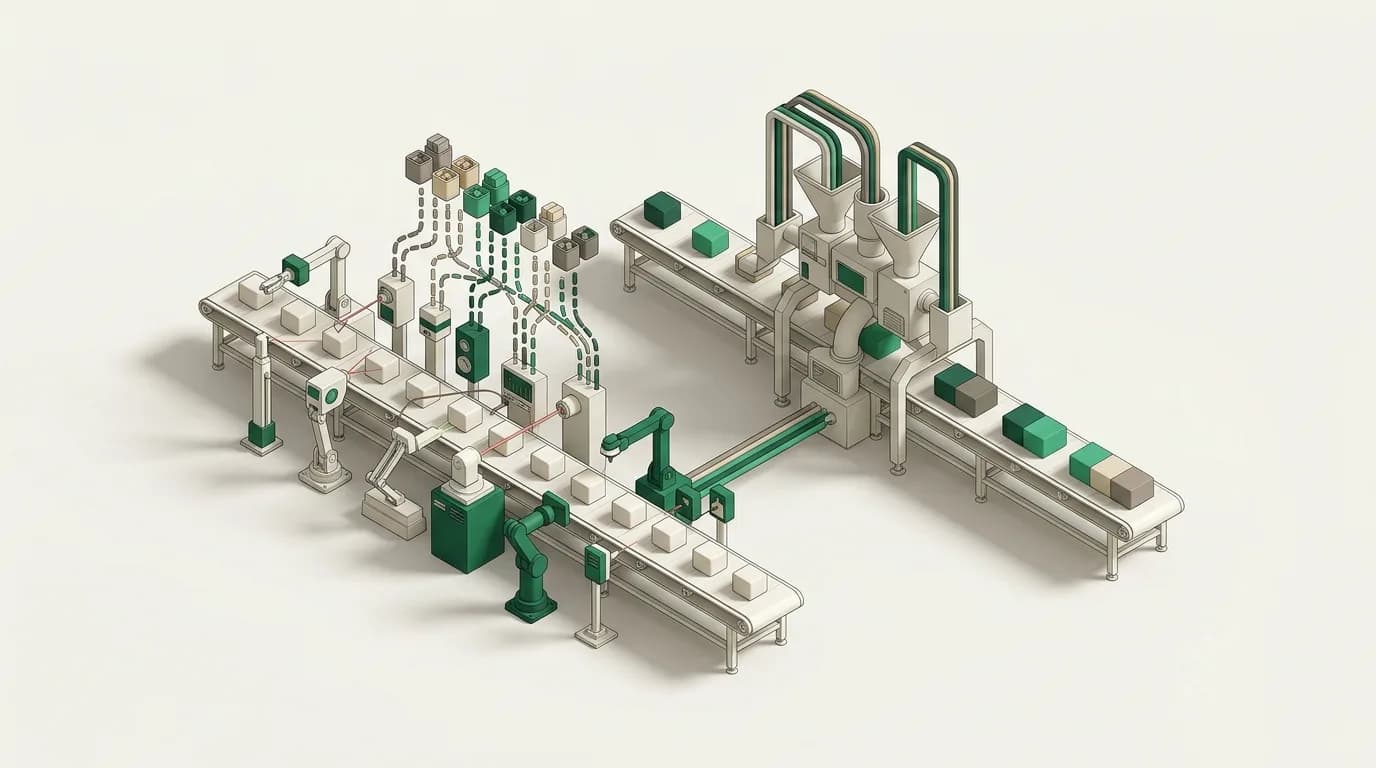
LCIA results can be presented at two levels: midpoint (category-level) or endpoint (damage-level). Each answers a different question; the right level depends on the decision type.
Midpoint — high scientific resolution
Midpoint stops at the middle of the environmental mechanism — answering "what does this emission do?" directly. GWP-100 (kg CO₂-eq) for climate change; AP (mol H+ eq) for terrestrial acidification; ODP (kg CFC-11-eq) for ozone depletion. Each category represents an independent mechanism. The midpoint advantage is transparency — you see which gas contributes to which category. The disadvantage: how do you collapse 18+ categories into a single decision?
Endpoint — human-comprehensible damage-based
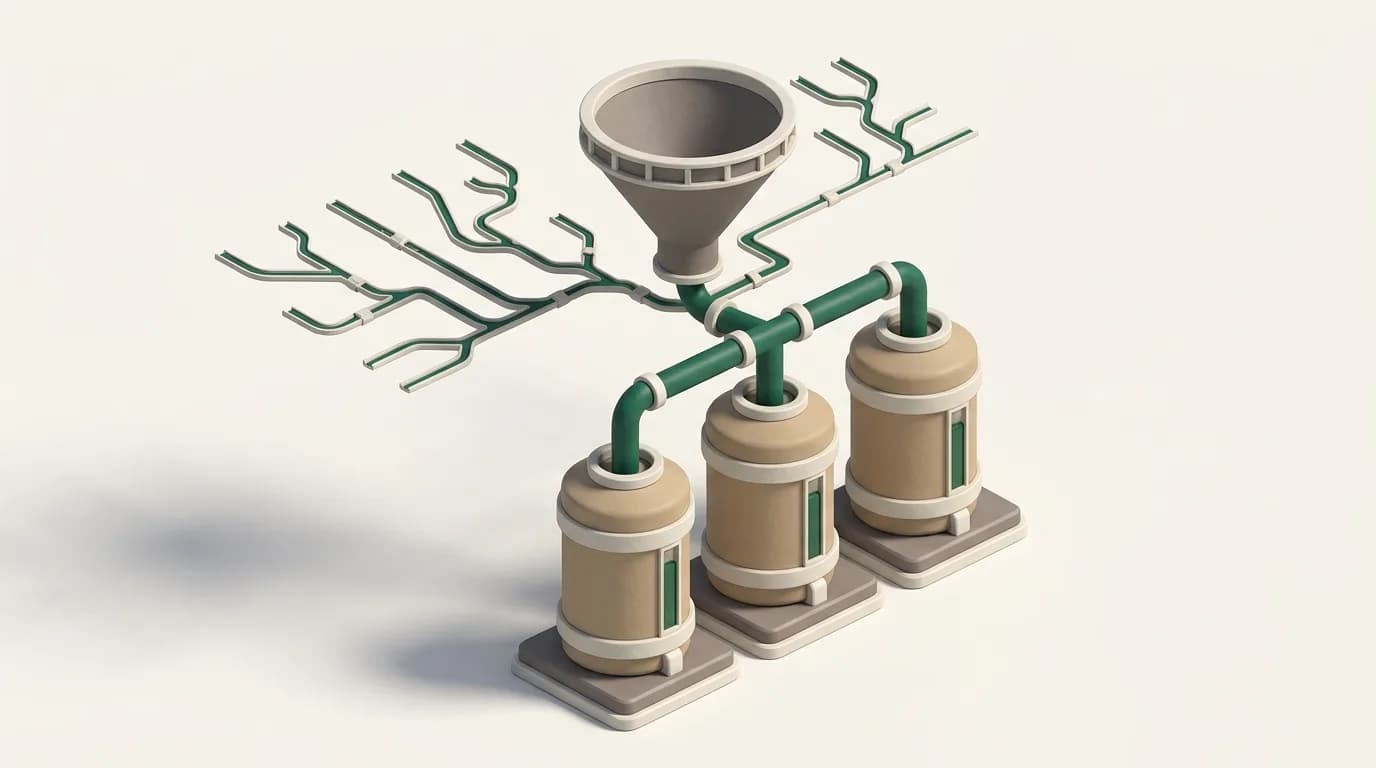
Endpoint analysis collapses midpoint categories into three damage areas: human health (DALY — Disability Adjusted Life Years), ecosystem quality (species·yr — regional species loss), resource scarcity (USD — increased extraction cost). ReCiPe and IMPACT World+ support this level. The advantage is communication — telling a manager "Product X carries 0.001 DALY of human-health burden and $0.50 of resource burden" is easier than "X kg CO₂-eq, Y kg SO₂-eq...". The disadvantage: endpoint conversion introduces more scientific uncertainty, and inter-category weighting carries value judgements.
Three steps: characterisation, normalisation, weighting
- Characterisation — converts inventory (kg CO₂, kg SO₂, kg N…) into impact categories (kg CO₂-eq, mol H+ eq…). Each method provides its own factors. Mandatory step.
- Normalisation — divides each category result by a reference (e.g. EU average yearly per-citizen impact). Output is dimensionless "fraction of yearly impact". Optional.
- Weighting — applies relative-importance coefficients across categories to produce a single score. Scientifically the most subjective; mandatory in PEFCR by panel decision, optional in ISO 14044.
What does EN 15804+A2 require?
EN 15804+A2 mandates only midpoint results — the modulary table (Table 8) requires midpoint indicators. Normalisation and weighting can be presented as supplementary, but they are not binding parts of the EPD. This prevents verifiers from comparing two products on a single score — only the midpoint categories are evaluated separately. Building-certification platforms (LEED, BREEAM) typically take GWP alone as the main comparison indicator; other categories remain background information.
Tags
- midpoint endpoint LCIA
- characterisation normalisation
- weighting LCA
- ReCiPe endpoint
- single-score LCA
Related reading
All articles in Data & Methods- Data & Methods
CML vs ReCiPe vs IMPACT World+: which LCIA method when?
Differences between the three leading LCIA methods: midpoint vs endpoint, geographic resolution, EN 15804 and PEFCR alignment, academic use.
11 min read - Data & Methods
EF v3.1 (Environmental Footprint): understanding the PEFCR-mandatory method
The EU Commission's EF method is mandatory under PEFCR. 16 categories, the normalisation and weighting reference set, and overlap with EN 15804.
10 min read - Data & Methods
LCI databases: choosing between ecoinvent, EF and sector datasets
Choosing a background database is not a technical detail but a methodological decision that changes the result. Coverage, system models and why you must not mix.
11 min read - Data & Methods
Primary and secondary data: which to collect for which line
Modelling everything with primary data is neither possible nor necessary. The foreground-background split and allocating a data collection budget well.
10 min read