GWP-100 vs GWP-20: how the time horizon shapes your LCA result
IPCC's 100-year and 20-year global warming potential factors yield different results. Methane can shift by 4×. Why and when does that matter?
By clca Editorial TeamLast updated
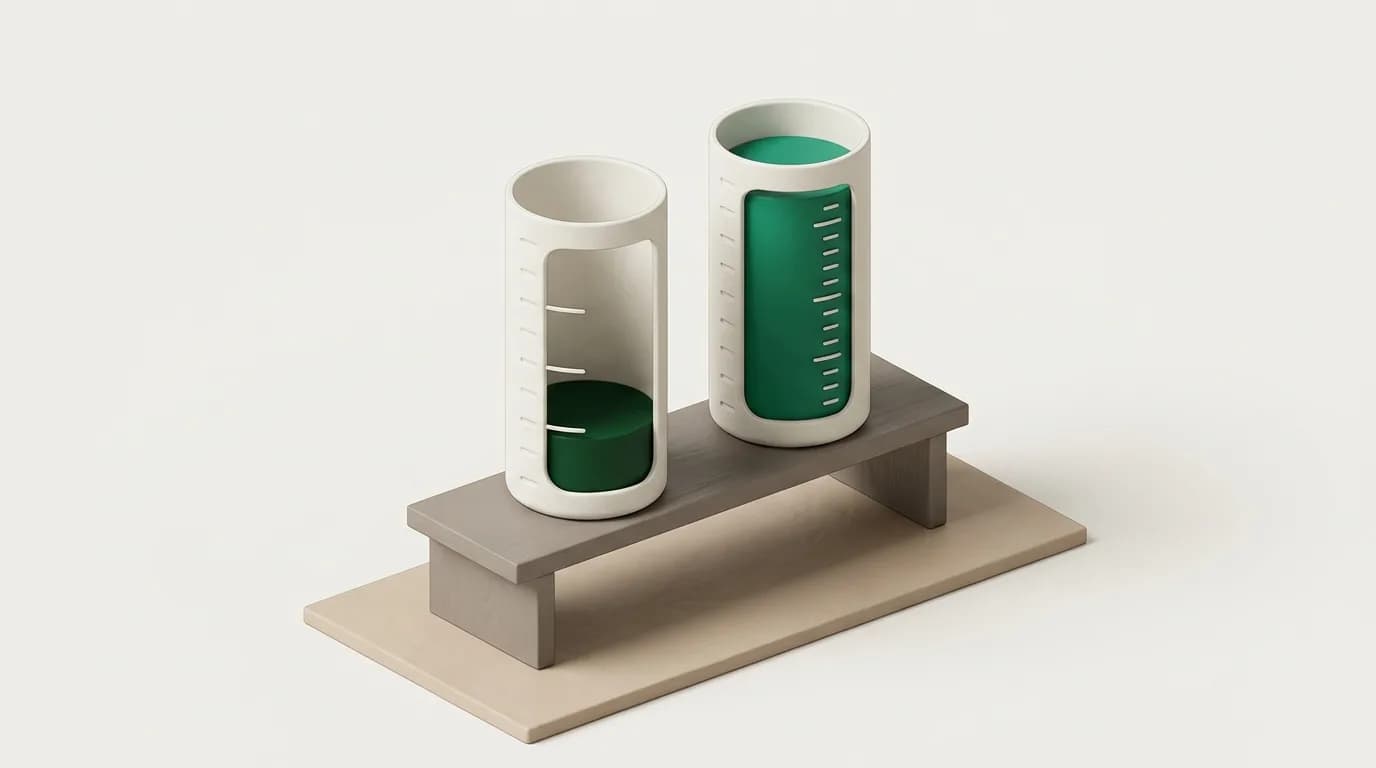
GWP (Global Warming Potential) looks like a single number but is actually a time-horizon-dependent metric. The two main horizons offered by the IPCC — 100 years (GWP-100) and 20 years (GWP-20) — value the same emission very differently. The choice is not academic — results can shift 30-200%.
Why a time horizon?
Greenhouse gases reside in the atmosphere for different durations. CO₂ is long-lived — hundreds of years. Methane (CH₄) lasts ~12 years. Over a 100-year horizon, methane's warming effect is averaged with long-lived CO₂ in a way that flattens the spike. Over a 20-year horizon, methane has not yet decomposed, so its contribution looks much larger. AR6 (IPCC 6th Assessment Report, 2021): methane's GWP-100 is 27.9, GWP-20 is 81.2 — almost 3× difference.
How much does it matter in construction LCA?
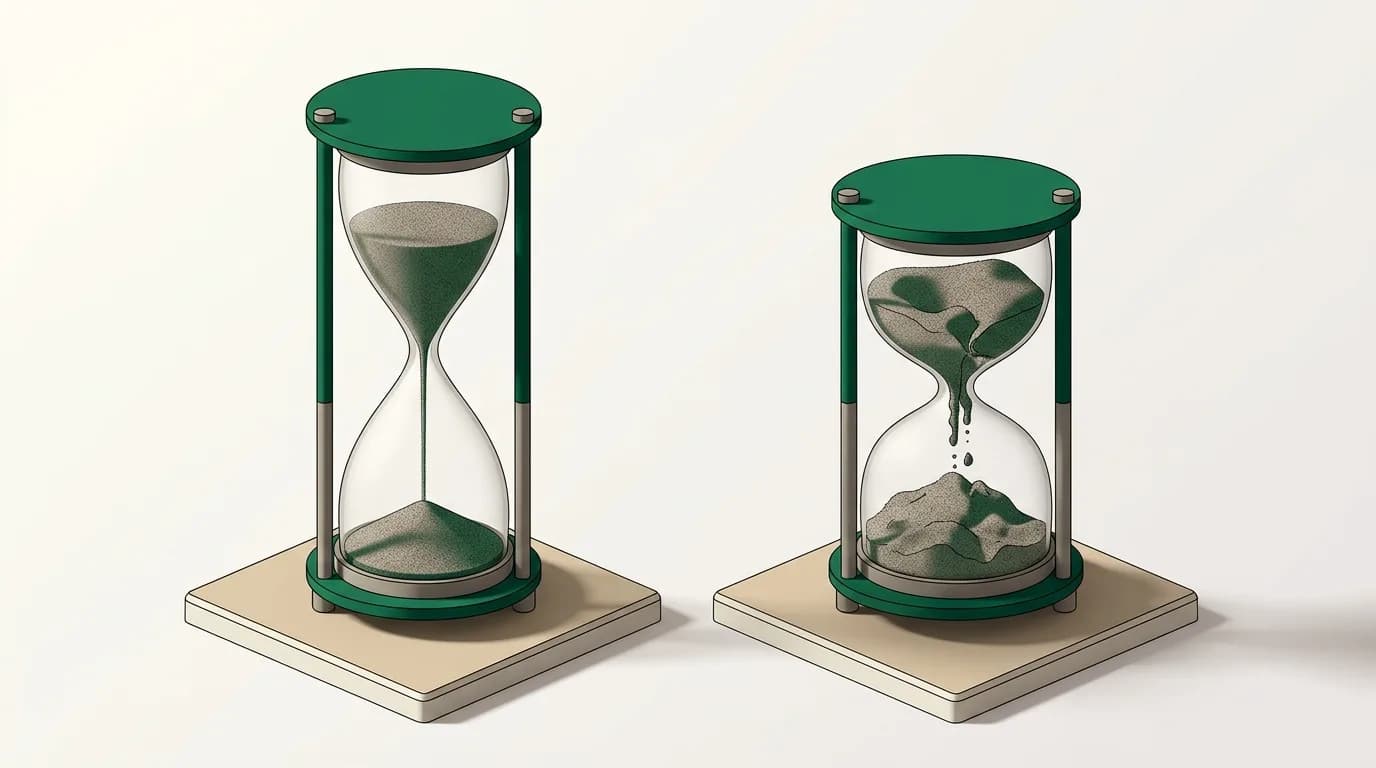
Construction materials are largely CO₂-dominant — fossil-fuel combustion and clinker process emissions in cement, steel, concrete are almost entirely CO₂. In these cases GWP-100 and GWP-20 yield similar results (5-10% difference). But for products involving biogenic waste streams (wood, bio-based plastics) methane emissions can matter — methane from organic landfill decomposition, leaks from composting. For these categories GWP-20 can be 30-50% higher.
Which standard uses which?
- EN 15804+A2 — GWP-100 (IPCC AR5 2013 values default; transition to AR6 under discussion)
- PEFCR + EF v3.1 — GWP-100 (IPCC AR5)
- GHG Protocol — GWP-100 (transition to IPCC AR6 in 2024-2025)
- IPCC reports — both GWP-100 and GWP-20 presented in parallel
- Some researchers — GWP* (new metric for short-lived gas pools)
AR5 vs AR6 — version differences
IPCC characterisation factors are revised with each assessment report. Between AR5 (2013) and AR6 (2021) methane's GWP-100 changed from 28 to 27.9 (close); but with climate-carbon feedback included the biogenic-methane version becomes 30. N₂O moved from 265 to 273. CFCs and HFCs received significant updates. EN 15804+A2 still references AR5 while EF v3.1 is shifting toward AR6 — meaning the same LCA model can produce 3-7% different GWPs across standards.
Tags
- GWP-100
- GWP-20
- methane GWP
- IPCC AR6
- climate change time horizon
Related reading
All articles in Data & Methods- Data & Methods
Beyond GWP: why the other impact categories matter
Focusing on carbon can reverse some decisions. The real role of acidification, eutrophication, ozone, toxicity and resource depletion.
11 min read - Data & Methods
ISO 14046 water footprint: withdrawn water is not consumed water
Counting litres is not a water footprint. Scarcity weighting, the consumption-versus-degradation split, and regional sensitivity.
10 min read - Data & Methods
Midpoint vs endpoint LCIA: which level for which decision?
Midpoint analysis offers 18+ categories; endpoint collapses to 3 main areas. The practical impact of characterisation, normalisation and weighting steps.
9 min read - Data & Methods
CML vs ReCiPe vs IMPACT World+: which LCIA method when?
Differences between the three leading LCIA methods: midpoint vs endpoint, geographic resolution, EN 15804 and PEFCR alignment, academic use.
11 min read