Foreground vs background data: getting the distinction right
The split between foreground (manufacturer-specific) and background (generic) data is the foundation of an LCA's scientific credibility. Practical rules and edge cases.
By clca Editorial TeamLast updated
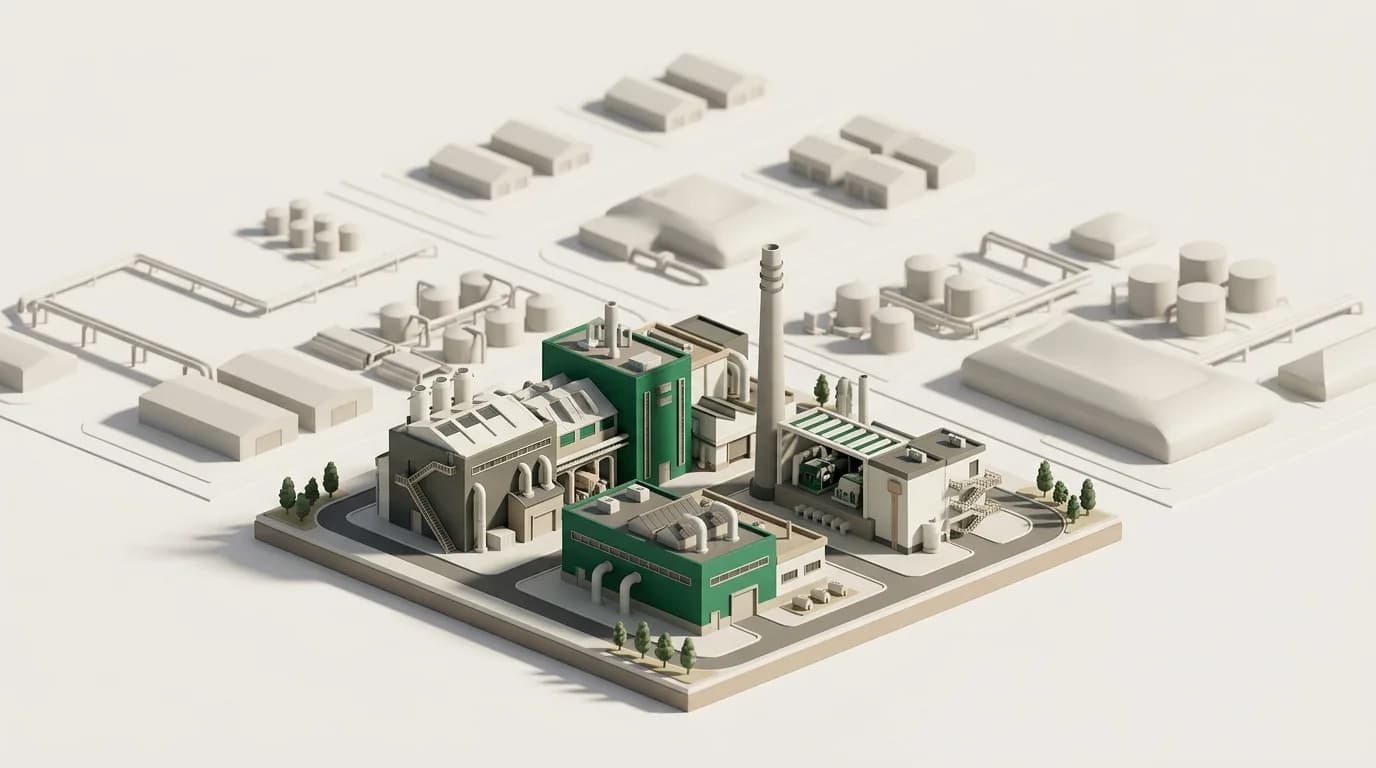
Every data point in your LCA model falls into one of two categories: foreground (under your control, varying with your decisions) or background (from external sources, taken as fixed). Setting this split correctly is essential for interpreting the model — and it is the first structural question a verifier asks.
Definitions
Foreground (specific) data is measured data from the manufacturer's own plant or close suppliers. Annual energy consumption, raw-material inputs, production waste, direct emissions are all foreground. Background (generic) data comes from global databases (ecoinvent, GaBi, Sphera DB) and represents averages — not the individual plant but the broader sector. An LCA model always mixes the two; the question is the proportions.
What does EN 15804+A2 require?

EN 15804+A2 mandates transparent reporting of the "specific data" share — your EPD must say (for example) 62% of total GWP comes from manufacturer-specific data, 38% from generic. Most PCR Part Bs require a minimum 50% specific share. Low specific share is a verifier-rejection trigger, especially when raw materials or energy use lack supplier-specific data.
Edge cases
- Your supplier has an EPD — does this count as specific data? Yes, supplier-specific EPDs are foreground
- Plant electricity consumption is measured but you use the EU average grid mix — Consumption is foreground, mix is background
- Product mass is measured but raw materials come from ecoinvent — Mass is foreground, raw-material profile is background
- Air-conditioning system usage data — specialised equipment is often missing from ecoinvent, sector average applies → background
- Complex product's sub-components from suppliers — modelling sub-component with ecoinvent is background; supplier-specific data is foreground
Foreground-expansion strategies
Raising the foreground share boosts EPD quality but costs effort. Most effective tactics: 1) request measured data from suppliers for major raw materials (cement, steel, plastics); 2) use meter readings for energy consumption; 3) measure waste and emissions on site; 4) use supplier EPDs when available; 5) for remaining items, pick the most specific ecoinvent version (and localise via custom activity creation).
Tags
- foreground background data
- specific generic data LCA
- manufacturer data LCA
- ecoinvent foreground
- primary secondary data LCA
Related reading
All articles in Data & Methods- Data & Methods
Scenario analysis: how end-of-life assumptions decide the result
Nobody knows what recycling infrastructure will look like in fifty years. How to work with that uncertainty and report scenarios honestly.
10 min read - Data & Methods
DQR Pedigree Matrix: scoring inventory data quality on 5 dimensions
How does EN 15804+A2's mandatory DQR system work? The 1-5 scale on each of five dimensions, the aggregate score, and triggering sensitivity scenarios.
10 min read - Data & Methods
ecoinvent activity selection: choosing the best fit on 3 criteria
Picking the right activity from ecoinvent's 21,000+ entries is a methodological decision. Geographic, technological and temporal representativeness.
10 min read - Data & Methods
Beyond GWP: why the other impact categories matter
Focusing on carbon can reverse some decisions. The real role of acidification, eutrophication, ozone, toxicity and resource depletion.
11 min read